
Why Medical Claims Get Denied and How to Reduce Claim Denials
Table of Contents
- Common Reasons Medical Claims Are Denied
- How to Reduce Claim Denials
- The Benefits of Professional Denial Management Services
- Conclusion
Medical claims are essential to the financial health of healthcare organizations. Yet, claim denials are one of the biggest challenges for hospitals, clinics, and medical practices. Understanding why medical claims get denied and implementing effective denial management in medical billing can significantly reduce revenue loss and administrative headaches.
Stop losing revenue to claim denials
Common Reasons Medical Claims Are Denied
Here are the most frequent reasons claims get denied and how they impact your revenue cycle:
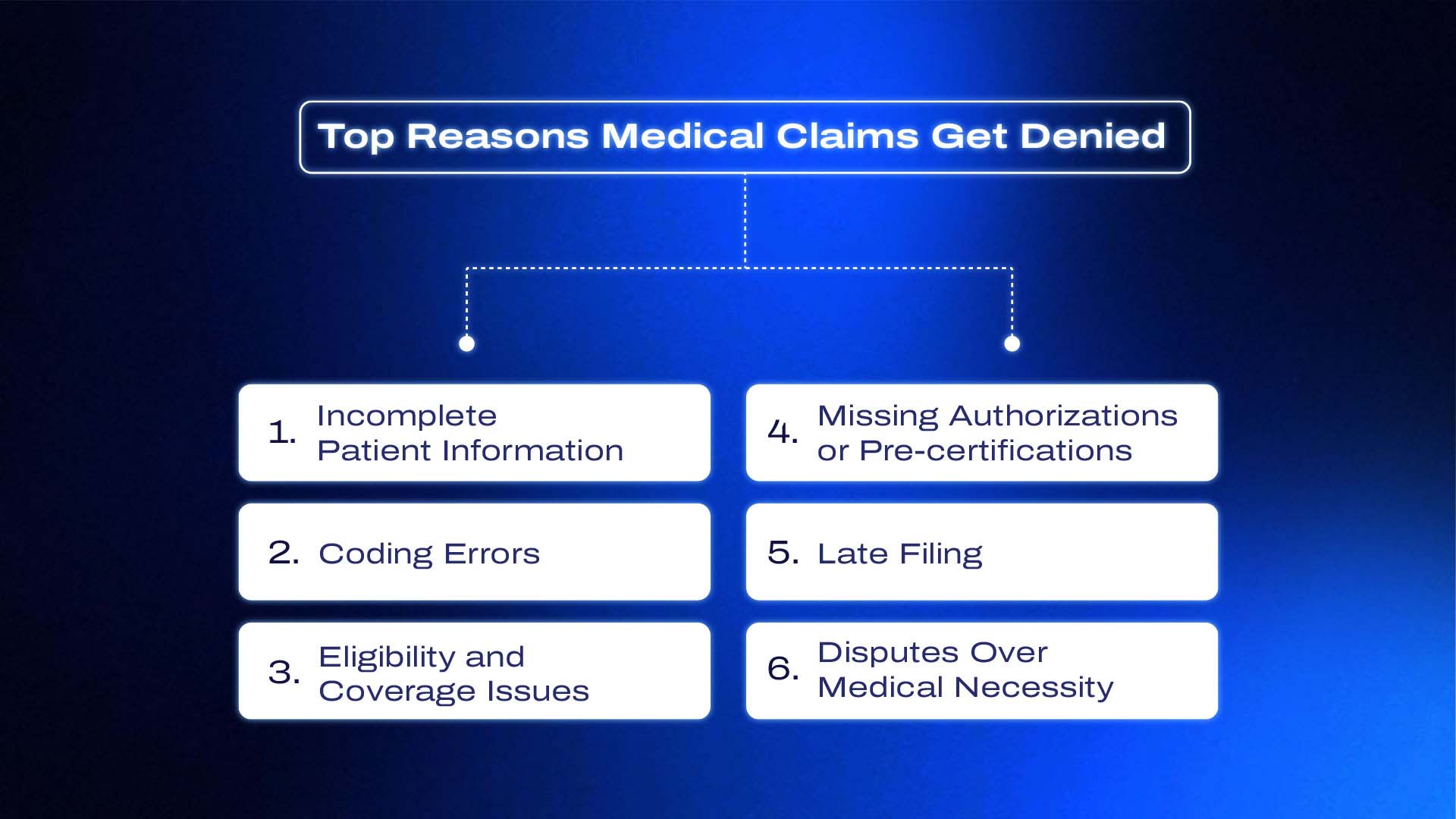
1. Incomplete Patient Information
Missing or inaccurate patient details, such as insurance ID, date of birth, or contact information, are among the most common causes of denials. Even minor errors can delay payments or result in outright claim rejection.
2. Coding Errors
Medical coding errors are another major cause. Using incorrect ICD, CPT, or HCPCS codes can lead to claim denials. Accurate coding is at the core of effective denials management.
3. Eligibility and Coverage Issues
Claims may be denied if the patient's insurance plan doesn't cover the procedure or if coverage has lapsed. Verifying eligibility before care is a crucial step in claim denial management.
4. Missing Authorizations or Pre-certifications
Certain procedures require prior authorization. Submitting claims without proper approvals often leads to denials. A robust denial management healthcare process ensures all approvals are in place.
5. Late Filing
Insurance companies have strict submission deadlines. Late claims are automatically denied. A reliable claim denial management system tracks deadlines and ensures timely submissions.
6. Disputes Over Medical Necessity
Some denials occur because insurers question whether the treatment was medically necessary. Proper documentation supporting the medical necessity is critical for successful appeals.
Take control of your revenue cycle today
How to Reduce Claim Denials
Reducing claim denials requires a proactive, systematic approach. Here's a 360° strategy for denial management services:
1. Pre-Submission Claim Review
Audit claims before submission to check for errors or missing information. Preventing errors upfront significantly reduces denials.
2. Implement Denial Management Software
Automated tools track claims, categorize denials, and identify recurring patterns. This makes denial management services more efficient and effective.
3. Staff Training and Continuous Education
Regular training on coding updates, insurance requirements, and documentation ensures staff are equipped to prevent errors and denials.
4. Analytics and Reporting
Analyzing denial trends provides actionable insights. If a particular service is frequently denied, processes can be adjusted to correct the root cause.
5. Structured Appeals Process
Not all denials should be accepted. A clear, documented appeal process supported by evidence can recover revenue efficiently.
Streamline your claims process now
The Benefits of Professional Denial Management Services
Outsourcing denial management services offers multiple advantages:
- Reduced Administrative Burden - Your team can focus on patient care instead of chasing denied claims.
- Higher Revenue Recovery - Systematic follow-ups and appeals increase claim acceptance rates.
- Improved Compliance - Experts stay up to date on regulatory changes and coding updates, reducing compliance risks.
- Data-Driven Insights - Analytics reveal recurring issues and optimize workflows for long-term improvement.
Conclusion
Claim denials are inevitable, but their impact can be minimized. By understanding the common reasons claims are denied and implementing a 360° denial management strategy, healthcare providers can reduce revenue loss, improve operational efficiency, and deliver better patient care.
With eHS denial management services, healthcare organizations receive expert support at every step from pre-submission audits to systematic appeals.
Our solutions help:
- Recover more revenue through timely and accurate follow-ups.
- Reduce administrative workload for in-house staff.
- Ensure compliance with the latest coding and insurance regulations.
- Provide actionable insights to prevent recurring denials.
Investing in eHS denial management services isn't just about reducing denials; it's about creating a sustainable, efficient, and profitable revenue cycle for your healthcare organization.