

End-to-End Medical Billing and Consulting Services
Medical billing is rarely the reason someone enters the healthcare field. Doctors want to treat patients. Clinics want to grow. But somewhere between seeing patients and getting paid, billing becomes the thing that causes the most frustration. Claims get rejected for reasons that aren’t always clear. Payments arrive late. Insurance companies request corrections or additional documentation. Staff spend hours following up, only to be told to resubmit the claims. Over time, this doesn’t just affect revenue; it affects morale.
That’s why end-to-end medical billing and consulting services exist, not as a luxury, but as a necessity in an increasingly complex billing environment.
Table of Contents
- What “End-to-End” Actually Looks Like in Real Life
- Why Medical Billing Has Become So Difficult
- Where Medical Billing Coding Services Matter Most
- What the Consulting Side Really Does
- How End-to-End Medical Billing Services Work, Step by Step
- Step 1: Patient Registration and Verification
- Step 2: Medical Coding
- Step 3: Claim Submission
- Step 4: Payment Posting
- Step 5: Denial Management
- Step 6: Patient Billing
- Step 7: Reporting
- Why Many Practices Outsource This Work
- Who These Services Are Actually For
- Choosing a Billing Partner That Actually Helps
- Final Thoughts
What “End-to-End” Actually Looks Like in Real Life
End-to-end medical billing isn’t just about sending claims to insurance companies. It means taking responsibility for the full process, including the areas that are often overlooked until problems arise.
It starts with patient information. If names, dates of birth, or insurance details are incorrect, the claim is already in trouble. Effective medical billing begins at this stage, not at the coding stage. Then comes insurance verification. Coverage changes often. Plans lapse. Benefits differ by service. Verifying this properly saves time later, even though it feels tedious upfront.
From there, the billing process progresses through coding, claim submission, follow-ups, payment posting, denial handling, and proper patient billing. End-to-end services don’t treat these as separate jobs. They’re connected, and each step affects the next one.
Maximize Your Practice’s Revenue and Efficiency.
Why Medical Billing Has Become So Difficult
Medical billing didn’t suddenly become complicated; it happened slowly. Insurance companies added more rules. Coding systems expanded. Documentation requirements increased. Compliance became stricter. At the same time, clinics were expected to increase efficiency while operating with fewer staff members.
Some common problems practices face:
- Claims rejected for missing or incorrect codes.
- Payments that don’t match what was expected.
- Staff spending too much time calling payers.
- No clear visibility into what’s actually owed.
- Fear of audits or compliance issues.
These problems are not always the result of significant errors; in most cases, they stem from small issues occurring repeatedly.
Where Medical Billing Coding Services Matter Most
Medical billing coding services are one of the most important and misunderstood parts of the process. Coding isn’t just selecting a code from a list. It requires understanding what the provider actually did, how it was documented, and how different payers interpret that information.
Bad coding causes:
- Underpayment (which often goes unnoticed).
- Overpayment (which leads to audits later).
- Denials that delay revenue.
- Compliance risks.
Accurate coding protects the practice, ensuring services are documented honestly and correctly, and that claims meet payer requirements.
What the Consulting Side Really Does
This is the part many people don’t fully understand. Medical billing and consulting services don’t just “handle billing.” They look at patterns. They ask uncomfortable but necessary questions.
- Why are certain claims always denied?
- Why does one payer take longer than others?
- Why are collections slowing down?
- Why is revenue inconsistent month to month?
Consulting involves reviewing workflows, documentation habits, payer behavior, and internal processes. Sometimes the fix is small. Sometimes it requires changing how things are done at the front desk or during documentation.
The goal isn’t perfection. It’s consistent and clear.
Simplify Your Revenue Cycle Management.
How End-to-End Medical Billing Services Work, Step by Step
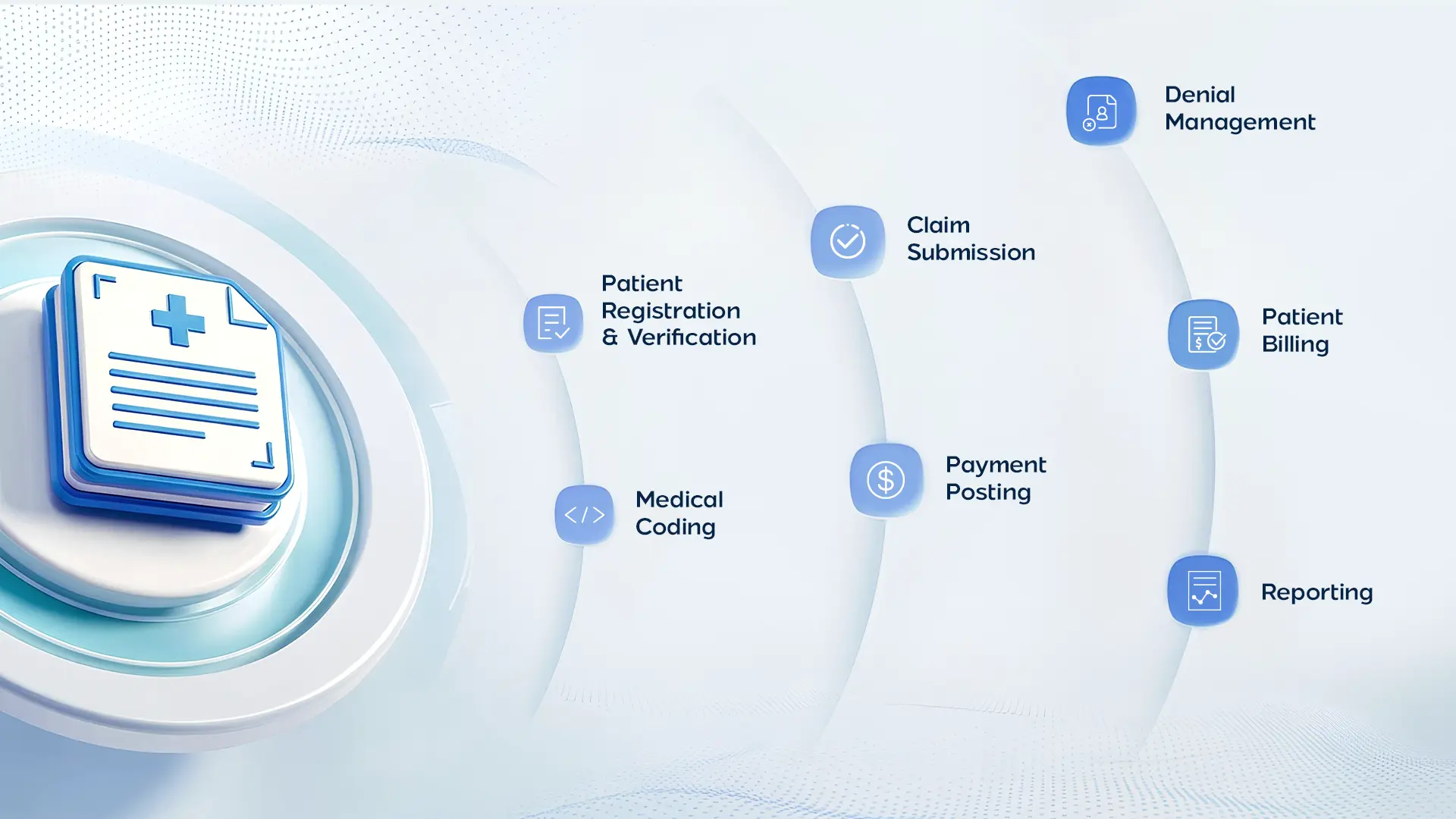
-
Step 1: Patient Registration and Verification
This is where many problems begin. End-to-end services ensure that patient and insurance details are accurate before any billing takes place. -
Step 2: Medical Coding
Trained professionals apply accurate codes based on documentation and current guidelines. This step directly affects payment. -
Step 3: Claim Submission
Claims are checked and submitted the first time correctly, reducing unnecessary rejections. -
Step 4: Payment Posting
Payments are applied accurately. Adjustments are reviewed. Nothing is left unclear. -
Step 5: Denial Management
Denied claims are reviewed carefully, not rushed. The cause is identified, corrected, and addressed to prevent it from recurring. -
Step 6: Patient Billing
Patients receive clear, understandable statements. Confusion leads to delays, so clarity matters. -
Step 7: Reporting
Reports show what’s pending, what’s paid, and where problems are occurring. Not flashy reports, useful ones.
Why Many Practices Outsource This Work
Managing billing in-house may seem manageable until staff turnover occurs, rules change, or claim volume increases. Outsourcing end-to-end medical billing and consulting services provides practices with access to professionals who perform this work every day across multiple providers and payers, reducing guesswork.
Benefits usually include:
- More predictable cash flow.
- Fewer billing errors.
- Less administrative pressure on staff.
- Better compliance.
- Time saved for providers.
It’s not about giving up control. It’s about not carrying everything alone.
Who These Services Are Actually For
These services aren’t just for large hospitals.
They’re used by:
- Small and mid-sized clinics.
- Specialty practices.
- Hospitals and health systems.
- Behavioral health providers.
- Telehealth organizations.
If a practice bills insurance, it can benefit from structured billing support.
Choosing a Billing Partner That Actually Helps
Not every billing company is the same. Some process claims. Others take ownership.
A good partner:
- Understands your specialty.
- Communicates clearly.
- Provides real insight, not generic reports.
- Cares about accuracy and compliance.
- Works with your team.
This relationship matters more than most people expect.
Final Thoughts
Medical billing will probably never be enjoyable. But it shouldn’t be chaotic, confusing, or constantly stressful.
With reliable end-to-end medical billing and consulting services, supported by experienced medical billing coding services, healthcare practices can stabilize their revenue and focus on what they do best. When billing runs quietly in the background, that’s when you know it’s working.