
In-House vs. Outsourced Medical Billing Cost Breakdown for Small Practices
Table of Contents
- What in-house medical billing really costs
- The real price of outsourced medical billing
- Side-by-side cost comparison that changes everything
- Where small practices lose money without realizing it
- When in-house billing actually makes sense
- Why outsourcing is becoming the smarter choice for small practices
- The real question is not cost but value
- How to choose the right billing approach for your practice
- Frequently Asked Questions
- Final Thoughts
Running a small medical practice is already a balancing act. Between patient care, compliance, and operations, billing often becomes a hidden burden. What looks like a "cost-saving" in-house setup can quietly drain time, accuracy, and revenue. On the other hand, outsourcing feels like an expense until you see the bigger financial picture.
So which one actually saves money?
Let's break it down.
What in-house medical billing really costs
At first glance, in-house billing seems straightforward: hire a billing executive, invest in software, and manage claims internally.
But the real cost runs deeper.
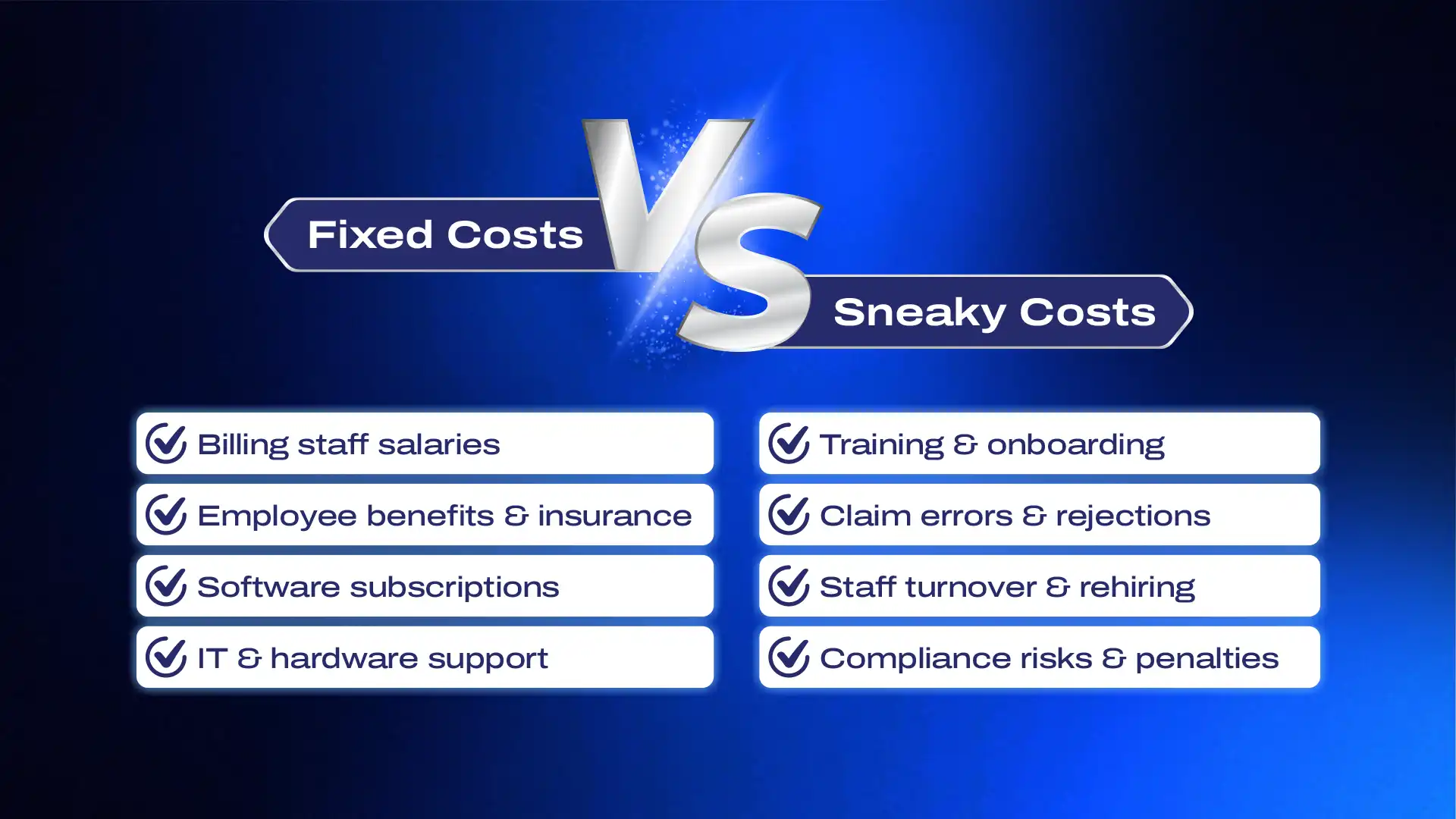
For small practices, even one billing error can delay payments for weeks.
Curious how much your practice could save?
The real price of outsourced medical billing
Outsourced billing typically works on a percentage model.
Typical pricing structure:
- 4% to 9% of collected revenue.
- Or per-claim pricing in some cases.
What you're actually paying for:
- End-to-end revenue cycle management.
- Certified billing and coding experts.
- Faster claim submissions.
- Reduced denial rates.
- Compliance and updates handled.
In simple terms, you're not just paying for billing; you're paying for efficiency and predictability. Want to make sure you choose the right partner? Check out our guide on How to Choose the Best Medical Billing Company for Small Practices for actionable tips.
Side-by-side cost comparison that changes everything
| Factor | In-House Billing | Outsourced Billing |
|---|---|---|
| Upfront Cost | High | Low |
| Monthly Cost | Fixed | Variable |
| Staffing Issues | High | None |
| Error Rate | Moderate to High | Low |
| Scalability | Limited | High |
| Compliance Risk | High | Low |
The biggest difference?
Outsourcing converts fixed overhead into performance-based cost.
Stop losing revenue to billing inefficiencies.
Where small practices lose money without realizing it
Most small clinics don't lose money on obvious expenses. They lose it in inefficiencies.
- Delayed claim submissions.
- Frequent denials and rework.
- Under-coding or over-coding risks.
- Missed follow-ups on unpaid claims.
These gaps directly impact cash flow. And they're far more common in in-house setups without specialized expertise. Curious if your current billing setup is costing you more than you realize? Read our blog Is Your Medical Billing Company Hurting Your Cash Flow? to uncover hidden revenue leaks.
When in-house billing actually makes sense
In-house billing isn't always the wrong choice.
It works if:
- You have a high patient volume.
- You can afford a dedicated billing team.
- You invest in continuous training and compliance.
- You want full control over processes.
For larger practices, this can be sustainable, and for smaller ones, it often becomes overwhelming.
Why outsourcing is becoming the smarter choice for small practices
Small practices today are choosing outsourcing not just to save money but to grow.
Here's why:
- Predictable costs help with financial planning.
- Faster reimbursements improve cash flow.
- Fewer errors mean fewer revenue leaks.
- Doctors can focus more on patient care.
It's less about cutting costs and more about maximizing revenue efficiency.
Turn your billing headaches into cash flow growth.
The real question is not cost but value
If you only compare expenses, in-house billing may seem cheaper.
But when you factor in:
- Time lost
- Errors made
- Revenue delayed
Outsourcing often delivers a higher return on investment. Because ultimately, billing isn't just an operational task; it's your revenue engine.
How to choose the right billing approach for your practice
Before deciding, ask yourself:
- Are billing errors affecting your revenue?
- Is your team spending too much time on admin work?
- Are reimbursements slower than expected?
- Do you have the expertise to handle compliance changes?
If the answer is yes to most, outsourcing may be the smarter move.
Stop letting billing eat into your profits.
Frequently Asked Questions
1. Is outsourcing medical billing cheaper than in-house?
In many cases, yes, especially when you factor in hidden costs like errors, delays, and staffing.
2. How much do medical billing companies charge?
Typically, between 4% to 9% of collected revenue, depending on services and volume.
3. Is outsourcing safe and compliant?
Reputable providers follow strict compliance standards, including HIPAA regulations.
4. Can small practices benefit from outsourcing?
Absolutely. It helps reduce workload, improve revenue cycles, and maintain consistency.
5. How do I know if my practice is ready to outsource billing?
If claims take too long, denials are high, or compliance is stressful, it's time to partner with eHS Medical Billing Services for faster, error-free revenue.
Final Thoughts
The difference between in-house and outsourced billing is not just operational.
- One keeps you busy.
- The other helps you grow.
With eHS Medical Billing Services, small practices gain more than just a billing team; they gain a partner that:
- Ensures faster, accurate claim submissions.
- Reduces denial rates and revenue leakage.
- Keeps your practice fully compliant with regulations.
- Lets you focus entirely on patient care instead of paperwork.
Outsourcing with a trusted partner like eHS turns billing from a headache into a strategic advantage.