

HIPAA-Compliant Healthcare Virtual Assistants - How to choose the right one?
Running a healthcare practice today means juggling far more than patient care. Phones keep ringing, appointment requests pile up, insurance questions never seem to stop, and paperwork somehow multiplies overnight. That’s why many practices are turning to virtual medical assistant services to ease the pressure on their in-house teams.
But here’s the thing, healthcare isn’t like other industries. You can’t just plug in any virtual assistant and hope for the best. Patient data is sensitive. Regulations are strict. Even one wrong move can lead to serious legal trouble. That’s why choosing HIPAA healthcare virtual assistant services isn’t just about convenience or cost. It’s about trust, security, and making sure your practice is protected while running more efficiently.
This guide walks you through what actually matters when choosing a HIPAA-compliant healthcare virtual assistant without the fluff.
Table of Contents
- What Does “HIPAA-Compliant” Really Mean in Virtual Assistant Services?
- Why Using a Non-Compliant Virtual Assistant Is a Risk You Don’t Want
- What to Look for in HIPAA-Compliant Virtual Medical Assistant Services
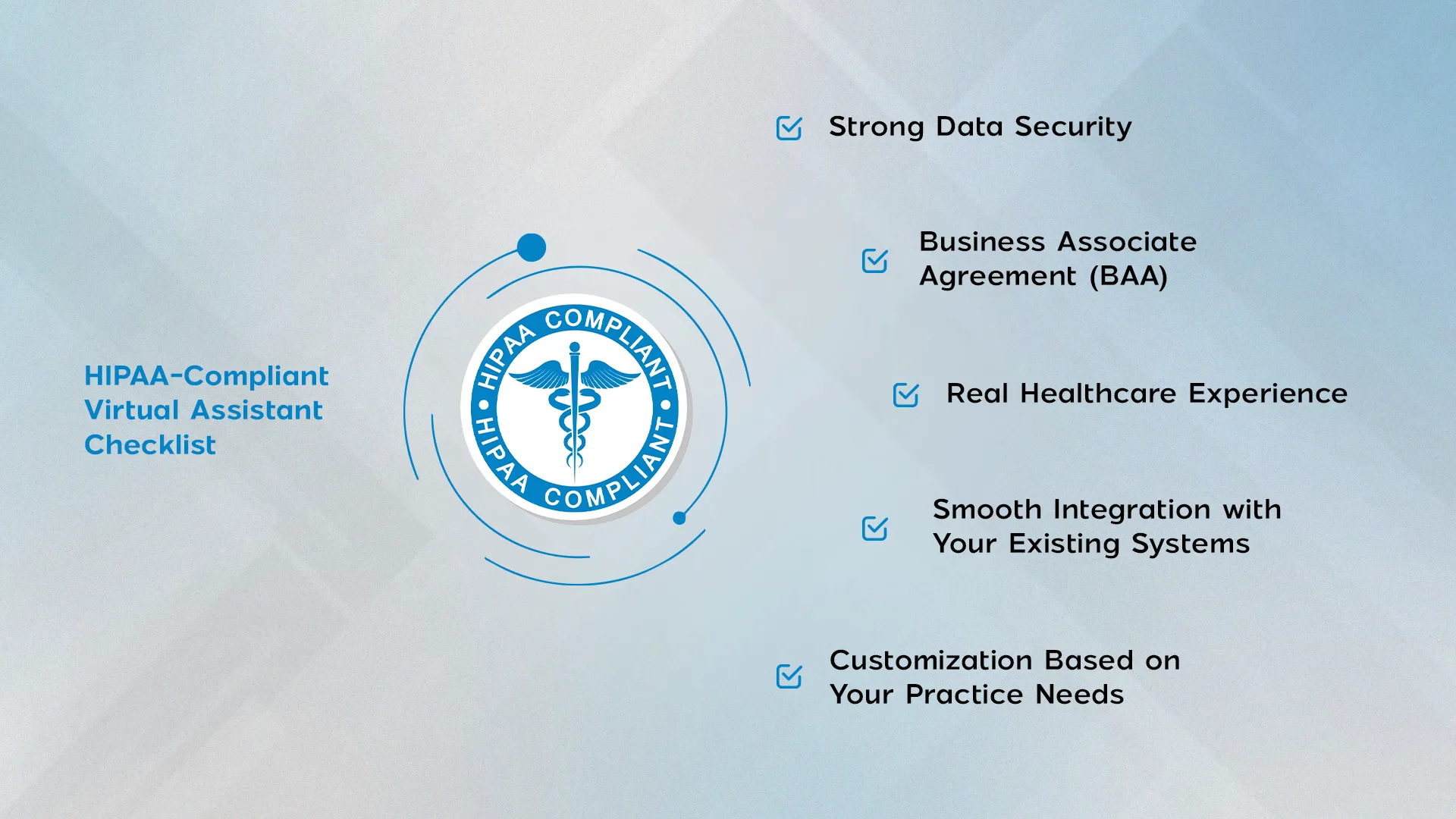
- Strong Data Security (Not Just Promises)
- Business Associate Agreement (BAA)
- Real Healthcare Experience
- Smooth Integration with Your Existing Systems
- Customization Based on Your Practice Needs
- How to Choose the Right HIPAA Healthcare Virtual Assistant: A Practical Approach
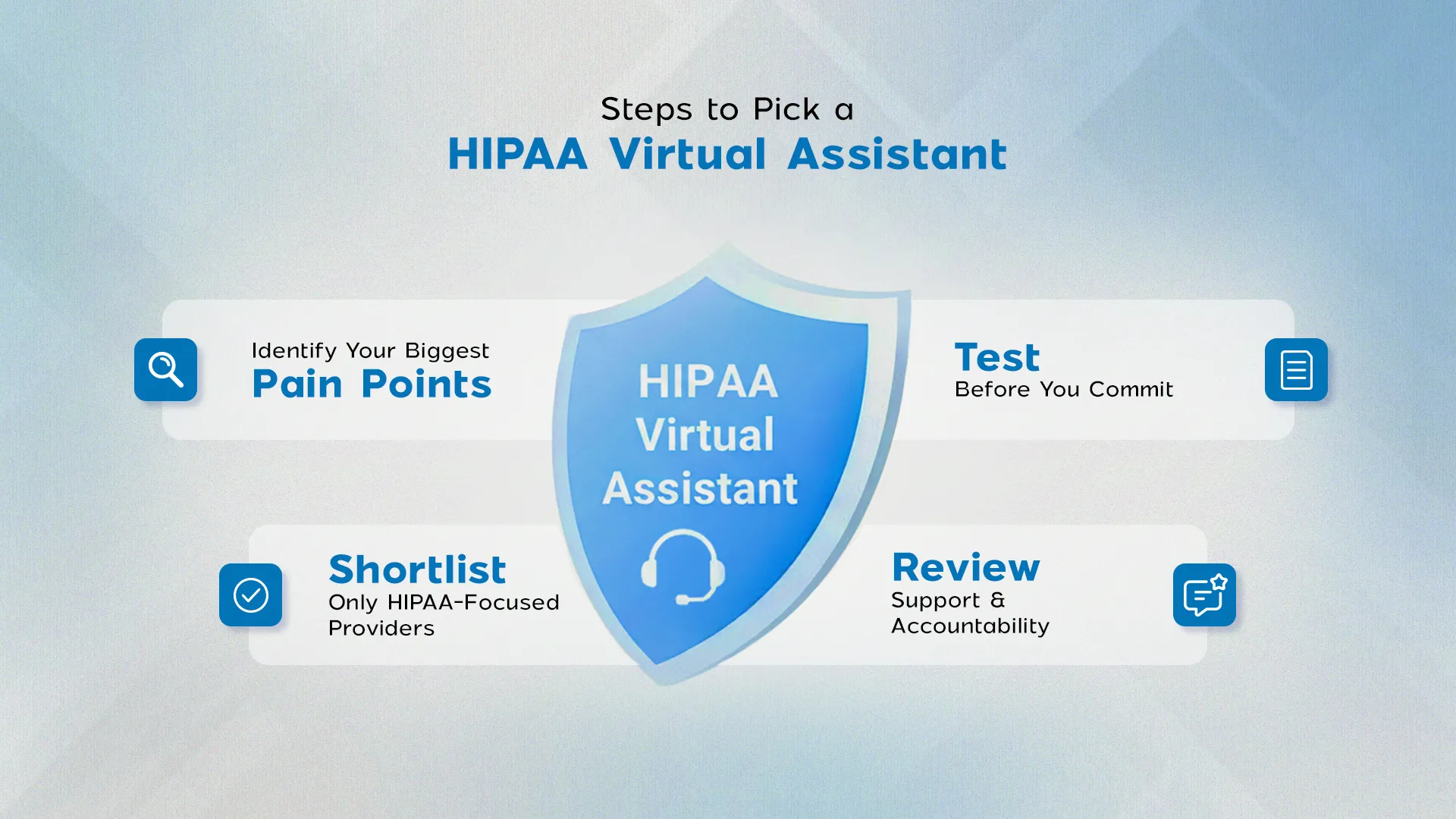
- Step 1: Identify Your Biggest Pain Points
- Step 2: Shortlist Only HIPAA-Focused Providers
- Step 3: Test Before You Commit
- Step 4: Review Support and Accountability
- Questions You Should Always Ask Before Signing
- Why the Right Virtual Assistant Improves Patient Experience
- Final Thoughts
What Does “HIPAA-Compliant” Really Mean in Virtual Assistant Services?
HIPAA exists for one reason: to protect patient information. Any service that touches appointment details, medical histories, insurance data, or even patient contact information is dealing with Protected Health Information (PHI). A HIPAA-compliant healthcare virtual assistant is specifically designed to handle these tasks without compromising patient data security. That means compliance isn’t an add-on; it’s built into the service's daily operations.
In practical terms, HIPAA healthcare virtual assistant services are used to:
- Schedule and manage appointments.
- Answer patient questions securely.
- Send reminders and follow-ups.
- Support billing and insurance workflows.
- Assist staff with administrative tasks tied to patient data.
If a virtual assistant can’t clearly explain how it protects PHI, it’s not the right fit, no matter how impressive the demo looks.
Tired of juggling calls, schedules, and compliance risks?
Why Using a Non-Compliant Virtual Assistant Is a Risk You Don’t Want
Some practices make the mistake of using general virtual assistants or offshore support without checking compliance. It may work for a while, but when something goes wrong, the consequences can be serious.
Data Breaches Are Expensive
A single breach can cost far more than what you saved by cutting corners. Fines, investigations, and damage control add up quickly.
HIPAA Violations Can Lead to Legal Action
HIPAA penalties aren’t theoretical. They happen regularly, and small practices are not exempt.
Loss of Patient Trust
Once patients feel their information is not secure, earning that trust back becomes incredibly difficult.
This is why investing in proper HIPAA healthcare virtual assistant services is not optional; it’s a safeguard for your entire operation.
What to Look for in HIPAA-Compliant Virtual Medical Assistant Services
Not all providers are created equal. Many claim compliance, but fewer can prove it.
Here’s what you should focus on.
1. Strong Data Security (Not Just Promises)
Ask clearly and specifically how patient data is protected. A reliable provider will have no problem explaining:
- How data is encrypted (both in transit and at rest)
- Who has access to patient information
- How activity is monitored and logged
- Where data is stored and backed up
If answers are vague or overly technical without clarity, that’s a red flag.
2. Business Associate Agreement (BAA)
This is non-negotiable.
Any company offering HIPAA healthcare virtual assistant services must sign a Business Associate Agreement (BAA). This document legally binds them to follow HIPAA regulations and accept responsibility for protecting PHI.
If a provider avoids this conversation or charges extra for a BAA, walk away.
3. Real Healthcare Experience
Healthcare workflows are very specific. A virtual assistant trained for real estate or e-commerce won’t automatically understand:
- Medical terminology
- Patient communication standards
- Billing and insurance processes
- HIPAA do’s and don’ts
The best virtual medical assistant services specialize in healthcare and can show real-world experience working with clinics, hospitals, or specialty practices.
4. Smooth Integration with Your Existing Systems
Your virtual assistant shouldn’t create more work.
Look for services that integrate with:
- Your EHR or EMR system
- Scheduling platforms
- Billing and practice management software
Good integration results in fewer errors, reduced duplication, and a smoother experience for staff and patients.
5. Customization Based on Your Practice Needs
No two practices operate the same way. A quality HIPAA-compliant virtual assistant allows customization, such as:
- Practice-specific workflows.
- Tailored patient communication scripts.
- Specialty-based intake questions.
- Flexible escalation to human staff.
Avoid one-size-fits-all solutions. They rarely work well in healthcare.
Need HIPAA-compliant virtual support?
How to Choose the Right HIPAA Healthcare Virtual Assistant: A Practical Approach
Instead of getting overwhelmed by features, take a simple step-by-step approach.
Step 1: Identify Your Biggest Pain Points
Start with what’s actually slowing your practice down:
- Missed calls?
- Overloaded front desk staff?
- Appointment no-shows?
- Billing follow-ups?
Knowing this helps you choose virtual medical assistant services that solve real problems, not imaginary ones.
Step 2: Shortlist Only HIPAA-Focused Providers
Don’t even consider vendors who “might” be compliant. Look specifically for:
- Healthcare-only service offerings
- Clear HIPAA documentation
- Willingness to sign a BAA upfront
This alone will narrow your options significantly.
Step 3: Test Before You Commit
A trial period is essential. During testing, pay attention to:
- Accuracy of responses.
- Ease of use for staff.
- Patient feedback.
- Error handling and escalation.
If the assistant creates confusion, it’s not ready.
Step 4: Review Support and Accountability
Ask what happens when something goes wrong:
- Who do you contact?
- How quickly do they respond?
- How are incidents documented and resolved?
Reliable HIPAA healthcare virtual assistant services take accountability seriously.
Questions You Should Always Ask Before Signing
Before finalizing anything, ask these directly:
- How do you ensure ongoing HIPAA compliance?
- Can you provide a signed BAA?
- What security audits do you undergo?
- How is patient data accessed and monitored?
- What happens if there is a data incident?
Straight answers matter more than polished sales pitches.
Why the Right Virtual Assistant Improves Patient Experience
When done correctly, a HIPAA-compliant virtual assistant doesn’t feel “virtual” to patients.
Patient's notice:
- Faster responses
- Clear communication
- Fewer scheduling mistakes
- Better follow-ups
All of this improves satisfaction while keeping their information safe, and that’s a win for everyone.
Final Thoughts
Choosing the right virtual medical assistant services is about more than saving time. It is about protecting your patients, supporting your staff, and ensuring that your practice remains compliant in an increasingly digital healthcare environment.
The right HIPAA healthcare virtual assistant services will:
- Reduce administrative burden
- Improve operational efficiency
- Protect sensitive patient data
- Support long-term growth
Take your time, ask the right questions, and choose a partner that truly understands healthcare, not just automation.